
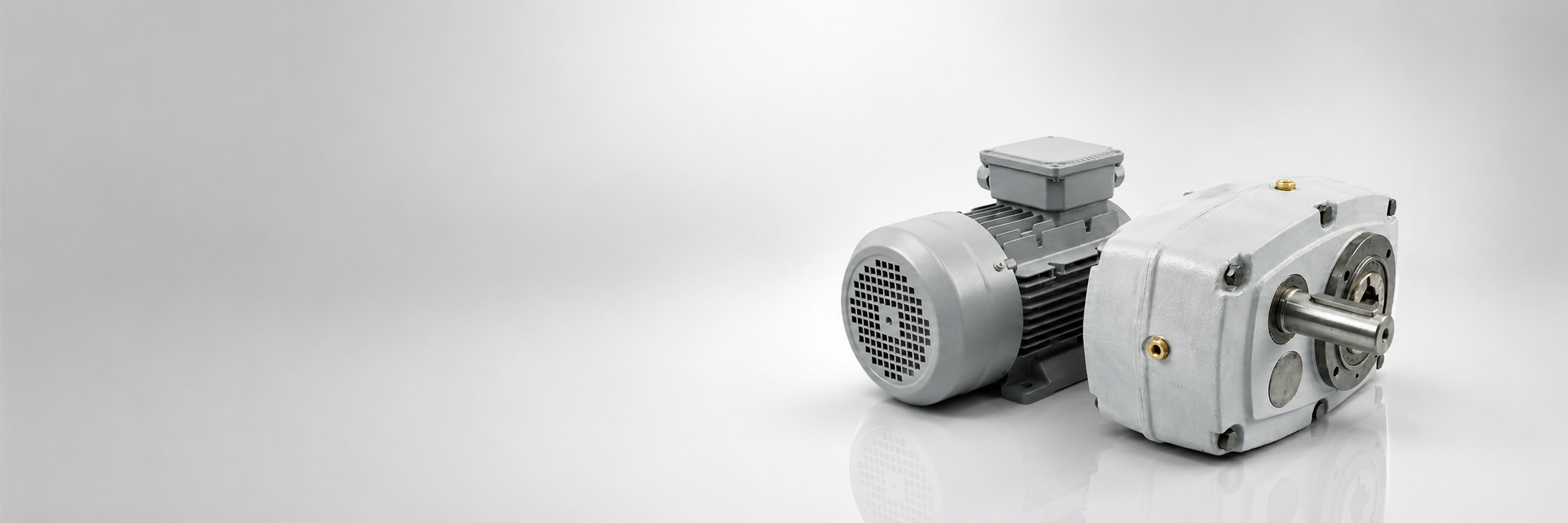
Gear Units & Motors

Gear Units & Motors
Interactive Motor & Gear Selector
Find the right motor power and gear unit for your conveyor drive
Motor Specifications
| Parameter | Specification | Notes |
|---|---|---|
| Phase | 3 Phase | Standard three-phase induction motors |
| Frame Size (IEC) | 112 – 280 | IEC standard frame sizes |
| Rated Power | 4 – 55 kW | Light to heavy-duty conveyor drives |
| Rated Speed @ 50 Hz | 1000 / 1500 / 3000 rpm | 6-pole, 4-pole, 2-pole configurations |
| Number of Poles | 2 / 4 / 6 | Optimised for torque and speed |
| Efficiency Class | IE3 / IE4 | High-efficiency, compliant with energy regulations |
| Frequency | 50 / 60 Hz | European and international standards |
| Rated Voltage | 400 – 690 V | Compatible with standard industrial power systems |
| Mounting Type | As requested | IEC standards: B3, B5, B14, V1, etc. |
About Gear Units & Motors
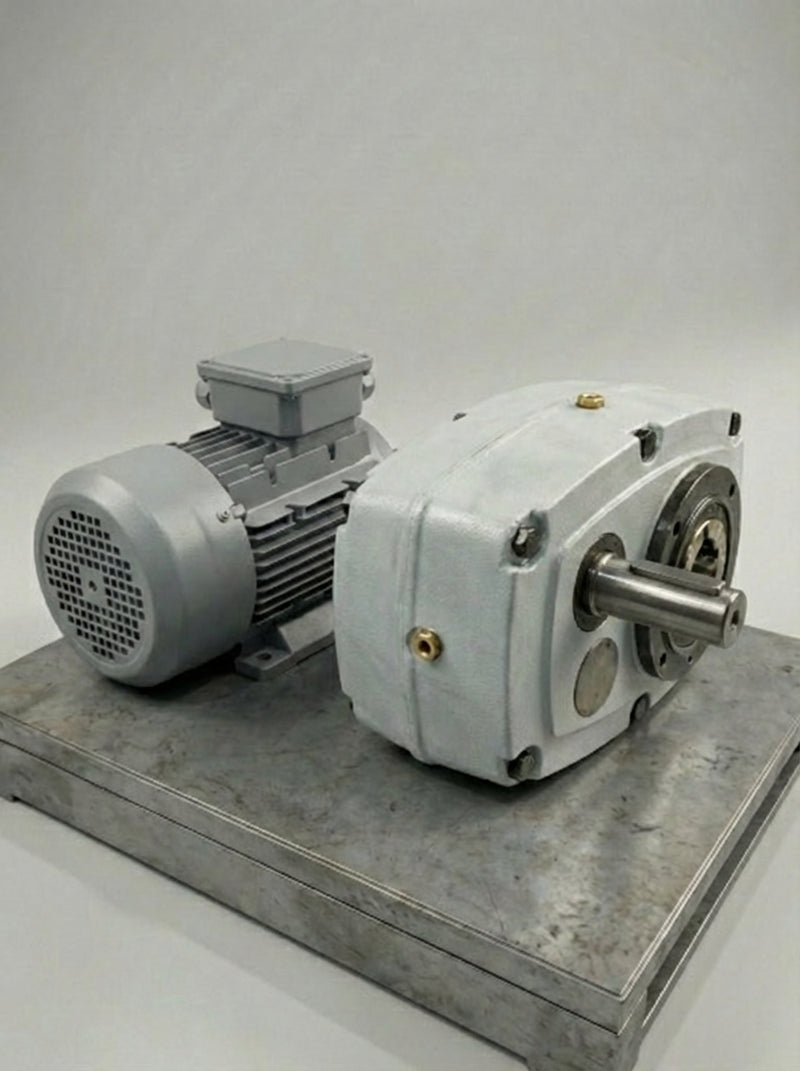
Moventis gear units and motors are selected based on the precise power, torque, and speed requirements of each conveyor system. The combination of a correctly sized electric motor with a compatible gear unit defines the efficiency, service life, and operating cost of the entire drive package.
Electric motors are specified by output power, rated speed, efficiency class, and frame size. IE3 and IE4 class motors reduce energy consumption and comply with current regulations. Motor selection accounts for load type (steady, variable, or shock), duty cycle, and ambient temperature — all of which affect thermal performance and insulation class requirements.
Gear units reduce motor shaft speed to the required drum speed and multiply torque in proportion to the gear ratio. Gear type selection — helical, bevel-helical, or worm — depends on the required ratio, torque level, shaft orientation, and mounting constraints. Helical gear units are the standard choice for conveyor drives up to moderate torque levels; bevel-helical units are used for higher ratios or when the motor and drum shafts are perpendicular.
The gear ratio is calculated from the required drum RPM and the selected motor speed. Output torque is directly proportional to motor power and inversely proportional to drum RPM — heavier, longer conveyors with lower belt speeds require higher torque and larger gear units. Moventis ensures that gear unit selection is matched to the actual service factor, not the nominal motor power alone.
Frequently Asked Questions
Motor power is determined from conveyor length, throughput capacity, material type and condition, belt speed, and duty cycle. These parameters feed into a base power lookup and are then multiplied by material, condition, and duty factors to produce the minimum required shaft power. The result is rounded up to the nearest standard motor rating.
Helical gear units are the standard choice for conveyor drives — they are compact, efficient, and available in a wide range of ratios. Bevel-helical units are used when the motor shaft must be perpendicular to the output shaft, or when very high gear ratios or torque levels exceed what a single-stage helical unit can provide.
The gear ratio is calculated by dividing the motor speed (rpm) by the required drum speed (rpm). Drum speed is derived from the target belt speed and drum diameter. The calculated ratio is used to select the appropriate gear unit size and type from the available range.
IE3 and IE4 designate high-efficiency motor classes under IEC 60034-30. IE3 is the minimum standard in most markets; IE4 offers further energy savings, particularly relevant for high-duty and variable-speed applications. Higher efficiency reduces operating costs and heat generation, extending motor life.
Yes. Moventis can supply pre-assembled motor-gearbox units (motoreduce) in foot-mounted, flange-mounted, or shaft-mounted configurations. This reduces installation time, ensures shaft alignment, and eliminates coupling selection from the scope of work.
Conveyors are typically classified as S1 (continuous duty) for steady throughput operations, or S3/S6 for cyclic or intermittent loading. The duty class affects motor thermal sizing — higher intermittency allows a smaller motor frame; continuous heavy-duty operation requires a motor rated for S1 at full load without derating.