
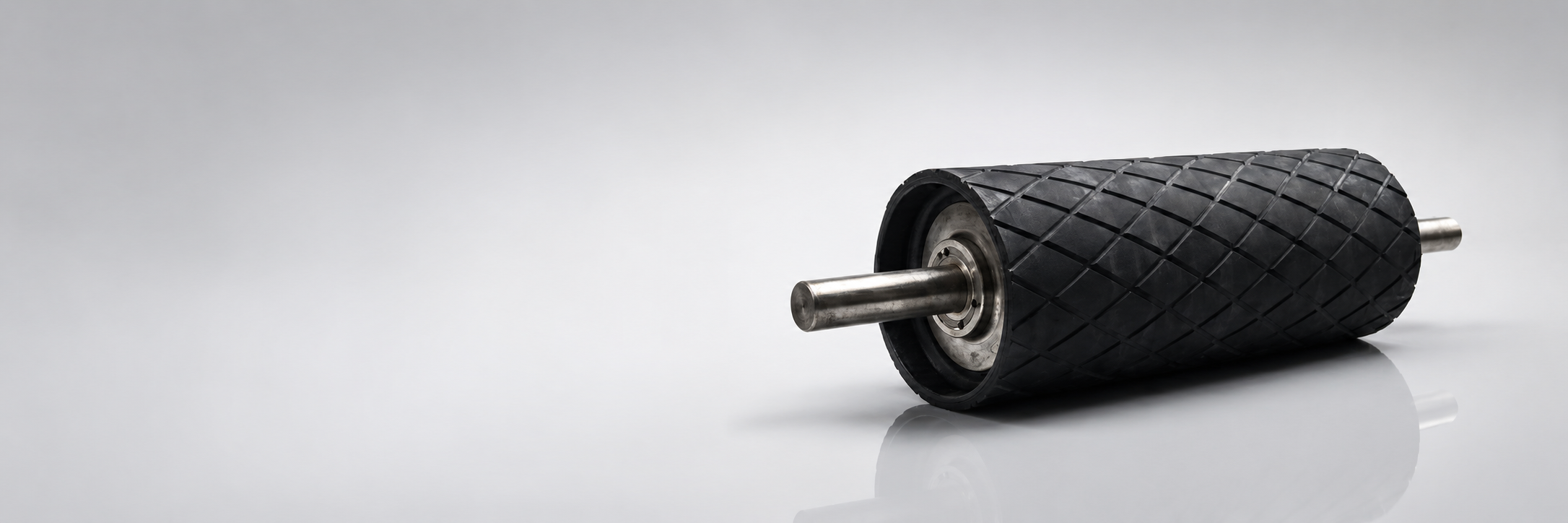
Drums and Pulleys

Drums and Pulleys
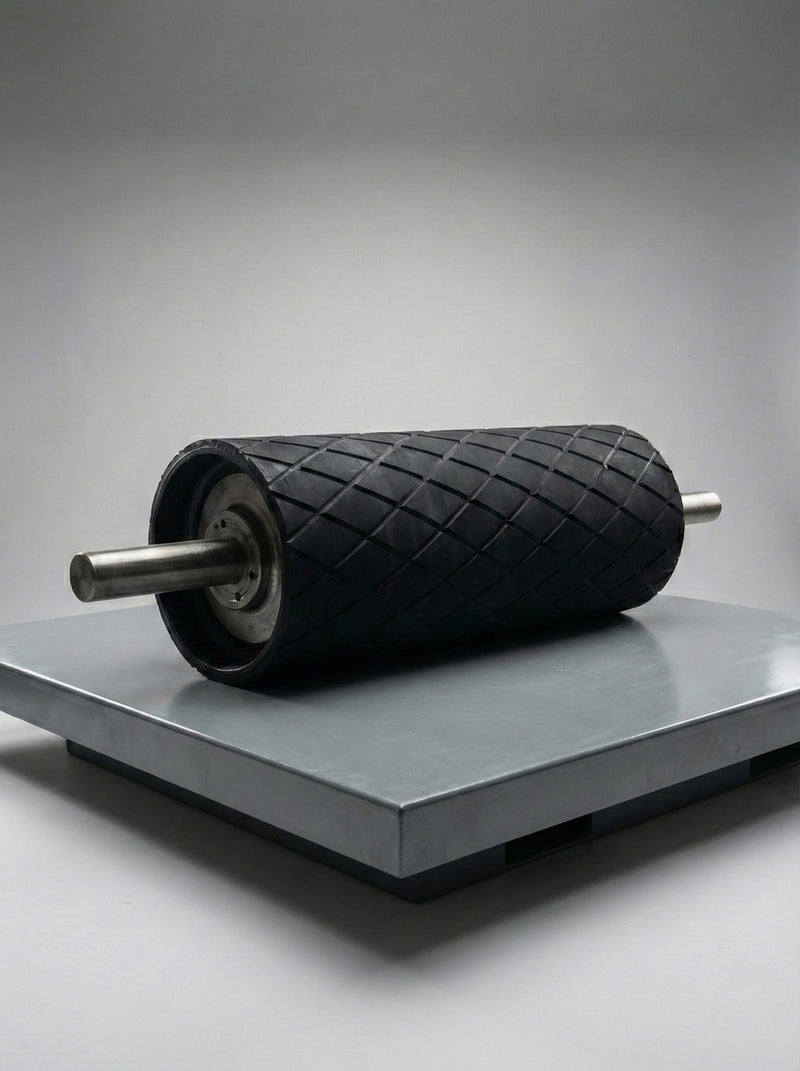
Interactive Pulley Selector
Find the right pulley specifications for your conveyor system
Pulley Categories
Browse our range of conveyor drums and pulleys designed for reliable power transmission and long service life.
About Drums and Pulleys
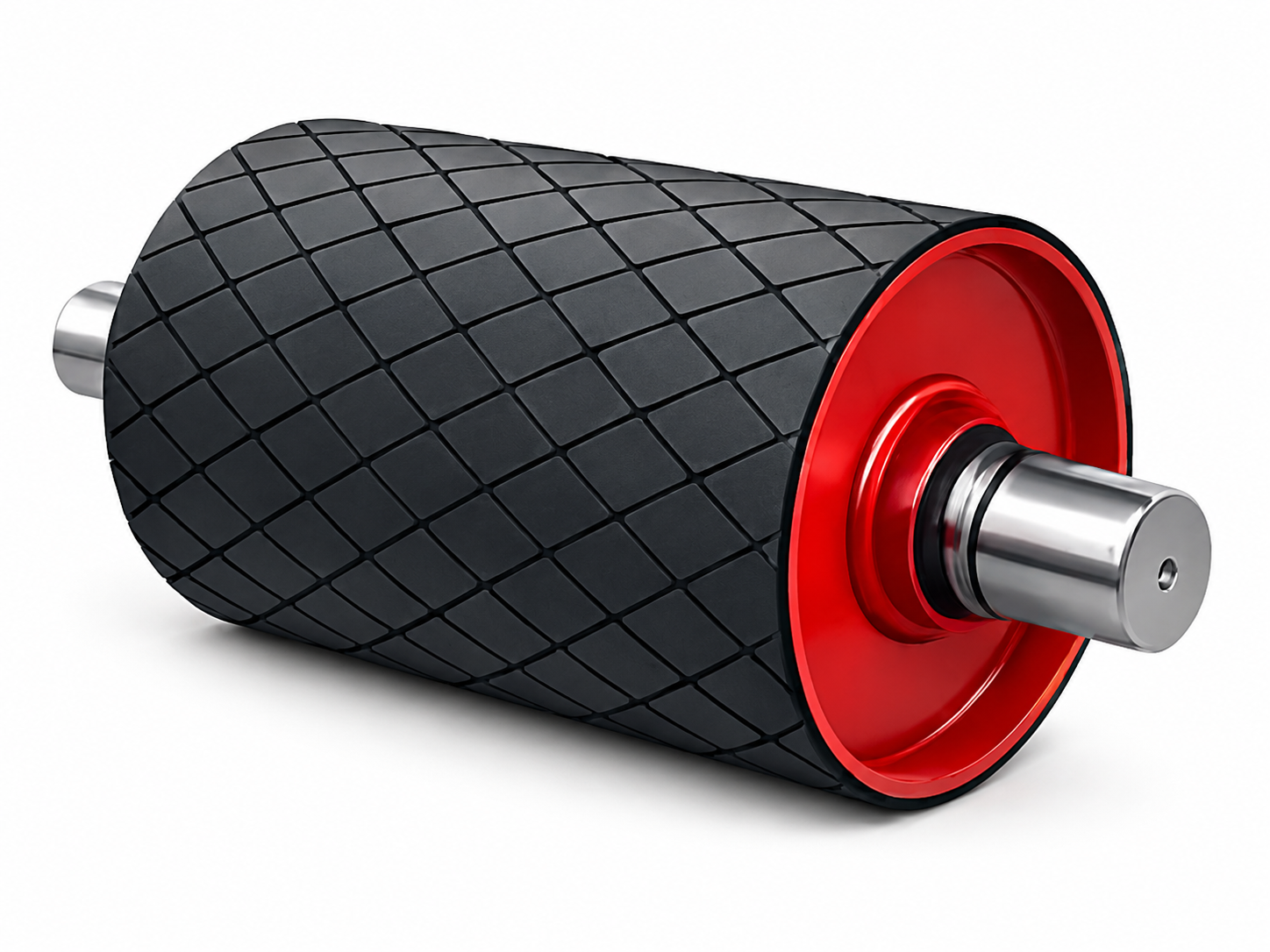
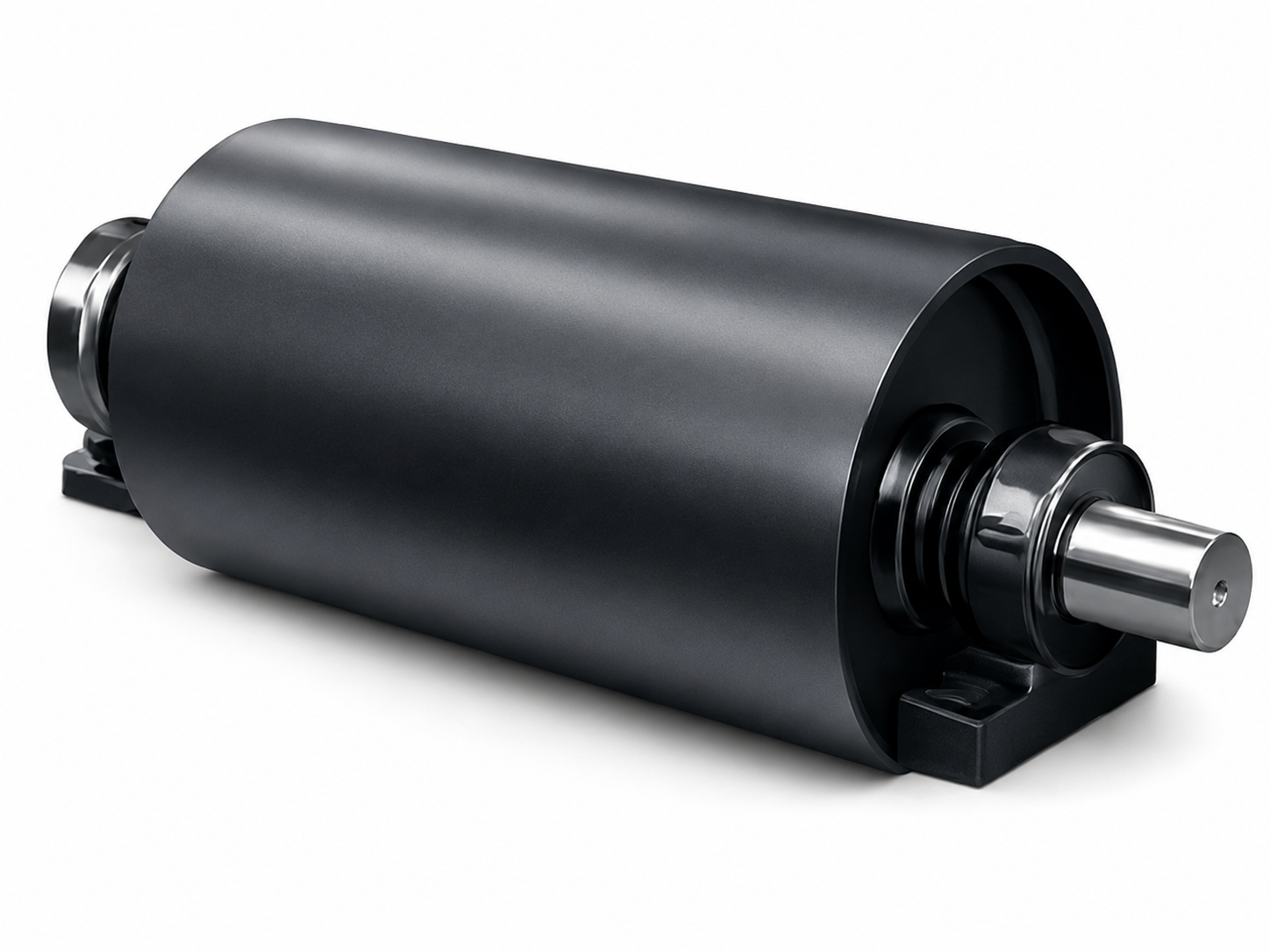
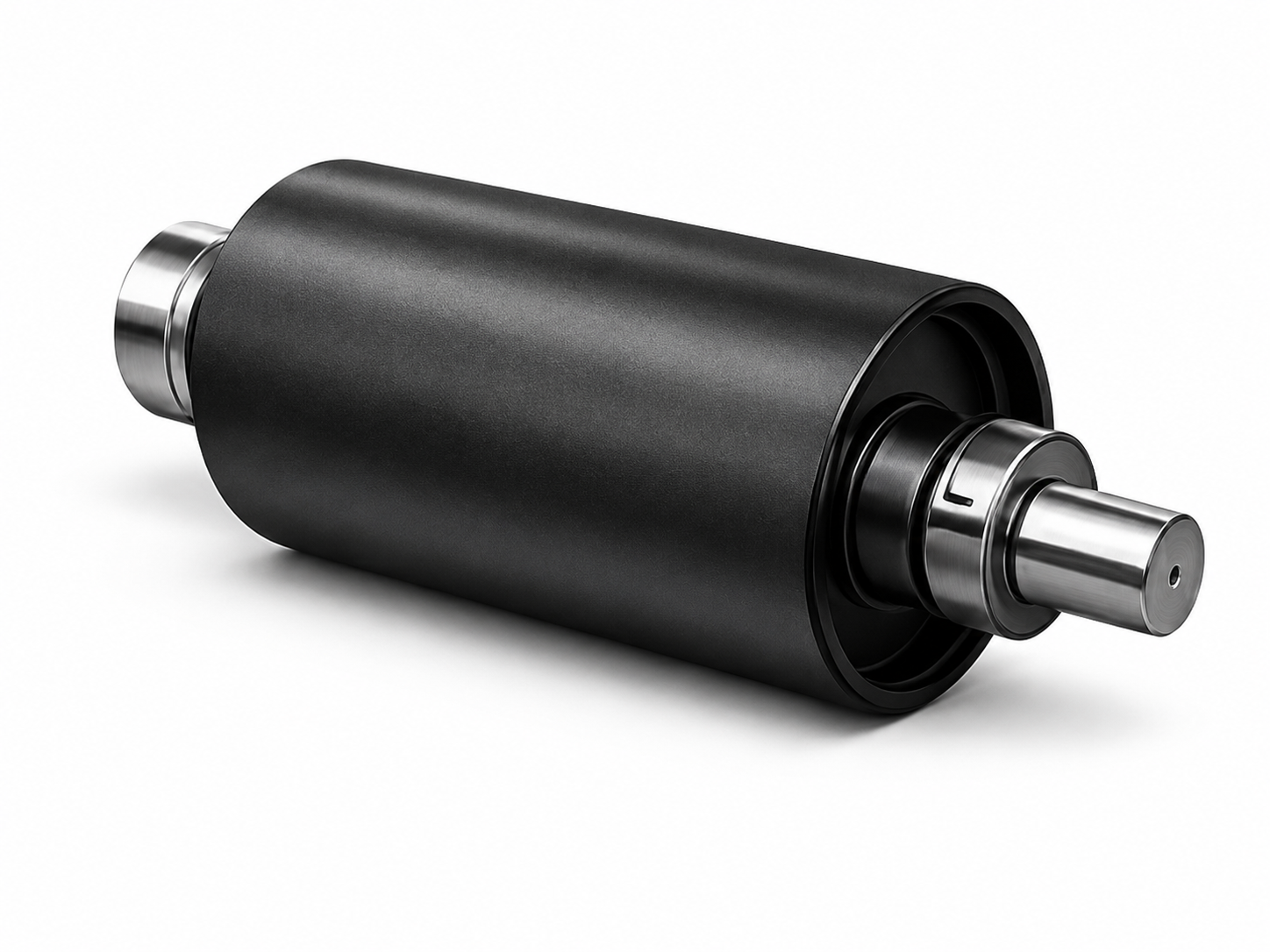
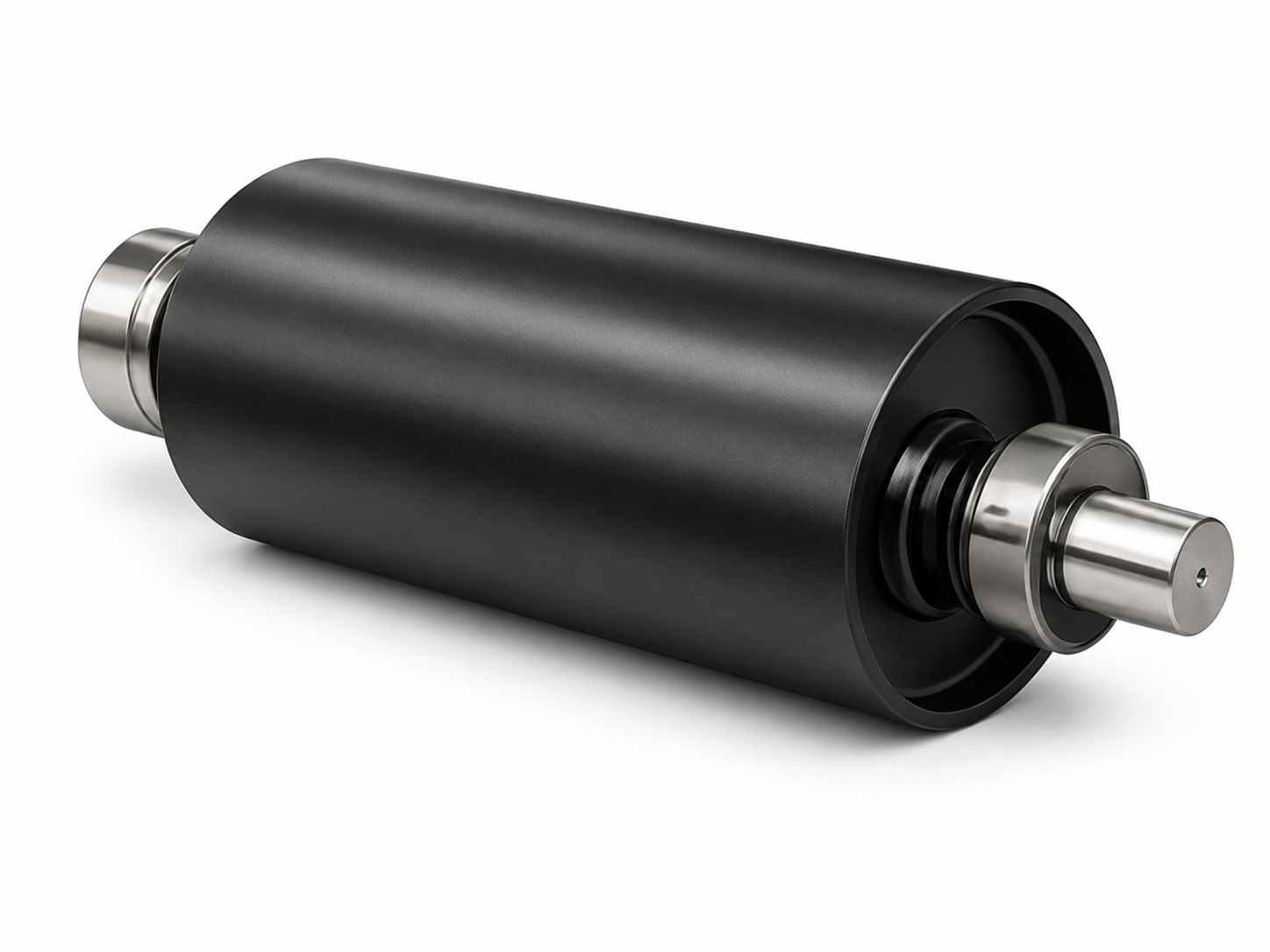
Moventis drums and pulleys are engineered to ISO and DIN standards, covering drive, tail, snub, bend, and take-up configurations. Each unit is built with precision-machined end discs, welded shell construction, and interference-fit hubs — designed to handle radial loads from belt tension while maintaining shaft alignment under continuous operation.
Drive pulleys are the most critical point of force transfer in any conveyor. The interaction between the belt and drum surface directly influences slip resistance, belt wear, and energy efficiency. Lagging selection — rubber for standard applications, ceramic for wet or high-tension conditions — is calculated based on friction coefficient requirements and operating wrap angle.
Tail and snub pulleys are designed with the same dimensional rigour as drive units, but optimised for lower load conditions. Wing-type tail pulleys enable self-cleaning and reduce material build-up in return belt applications. Snub pulleys are used to increase wrap angle on the drive drum, improving traction without requiring a larger diameter drive pulley.
Pulley face width is calculated at belt width plus an overhang margin determined by duty class. Bearing housings are selected for L10 life targets above 40,000 hours under rated load conditions. Shaft deflection is limited to 0.5 mm/m to prevent premature seal and bearing failure.
Frequently Asked Questions
A drive pulley is connected to the motor/gearbox and transmits torque to the belt. A tail pulley sits at the discharge or loading end and simply redirects the belt — it carries no drive load. Drive pulleys are typically larger diameter and lagged; tail pulleys are usually smaller and may be wing type for self-cleaning.
Lagging increases the friction coefficient between the belt and drum surface, reducing slip — especially under high tension or wet conditions. Rubber lagging suits standard environments; ceramic lagging is specified where moisture, fine particles, or heavy starting loads are present.
Face width is set at belt width plus an overhang margin — typically 50 mm for standard duty and 100 mm for heavy duty applications. This ensures the belt tracks centrally without loading the shaft bearings asymmetrically.
Snub pulleys increase the wrap angle of the belt around the drive pulley, which improves traction and reduces the risk of belt slip without requiring a larger drive drum diameter. They are typically used when the natural wrap angle is below 180°.
Pulley diameter is determined by the belt carcass type (EP, NN, or Steel Cord), strength class, and ply count. Minimum diameters follow ISO/DIN lookup tables. The recommended diameter steps up based on duty cycle, environment, start mode, and pulley type to extend belt carcass life.
Properly sized pulleys with correct bearing selection typically achieve L10 lives exceeding 40,000 operating hours under rated conditions. Bearing selection accounts for radial belt tension loads, shaft deflection limits (≤0.5 mm/m), and sealing requirements for the operating environment.