A conveyor belt that fails early is almost never the wrong brand — it is the wrong specification. Five decisions determine whether a belt reaches its expected service life: carcass strength, cover grade, cover thickness, minimum pulley diameter and the troughing geometry.
1. Start with the material, not the belt
The material being conveyed sets the boundary conditions for everything else. Sharp-edged crushed rock demands cut- and gouge-resistant covers; hot clinker demands heat-resistant compounds; oily waste demands oil-resistant grades. Before any strength calculation, record four properties: lump size, abrasiveness, temperature and moisture.
2. Size the carcass for tension, not for weight
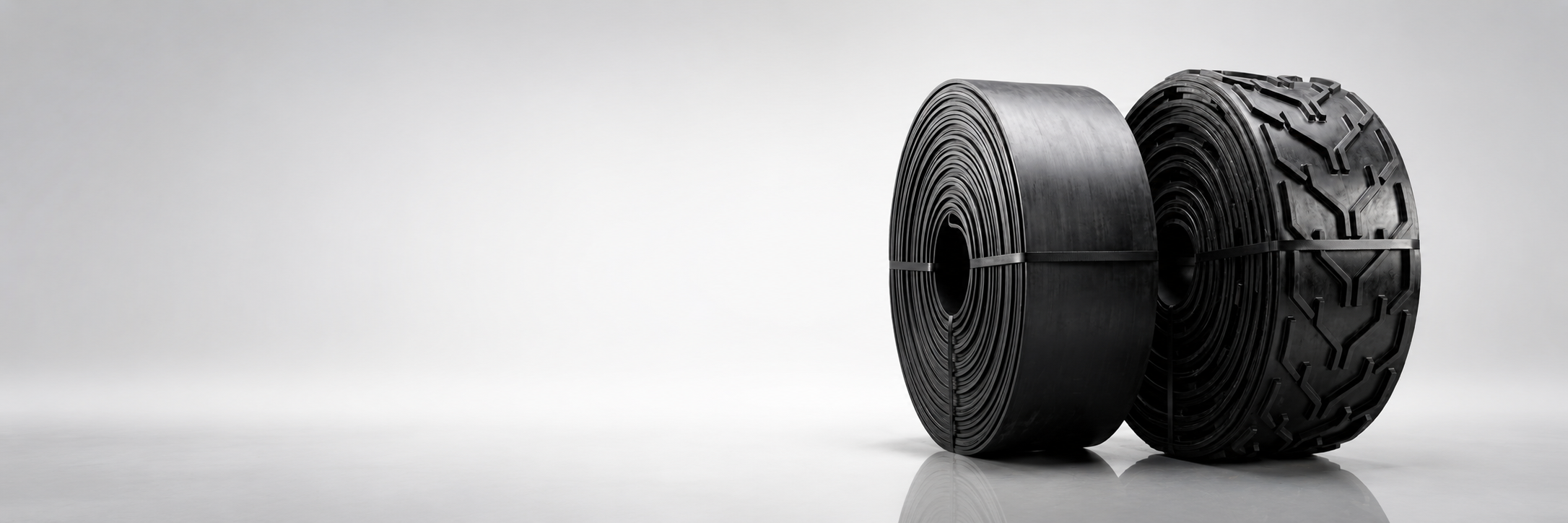
Carcass strength is expressed in newtons per millimetre of belt width (for example EP 500/3 means 500 N/mm across three plies). The required value follows from belt tension, which in turn follows from conveyor length, lift and capacity. A short horizontal conveyor moving sand rarely needs more than EP 125; a 300-metre inclined conveyor moving crushed stone can require EP 500 or above.
Over-specifying the carcass is not a safe choice. A belt that is too rigid will not trough correctly, which causes edge wear and material spillage.
3. Choose cover thickness by impact, not by budget
The top cover absorbs impact at loading points and abrasion along the route; the bottom cover carries the belt across idlers and pulleys. A 5+2 mm combination suits general aggregate duty. Heavy loading zones with large lumps justify 6+2 mm or thicker top covers, and the extra rubber pays for itself in avoided splice repairs.
4. Respect the minimum pulley diameter
Every carcass has a minimum bending diameter. Running an EP 500/4 belt over a 315 mm drive pulley will delaminate the plies long before the covers wear out. When an existing structure limits pulley size, the belt specification must adapt — not the other way around.
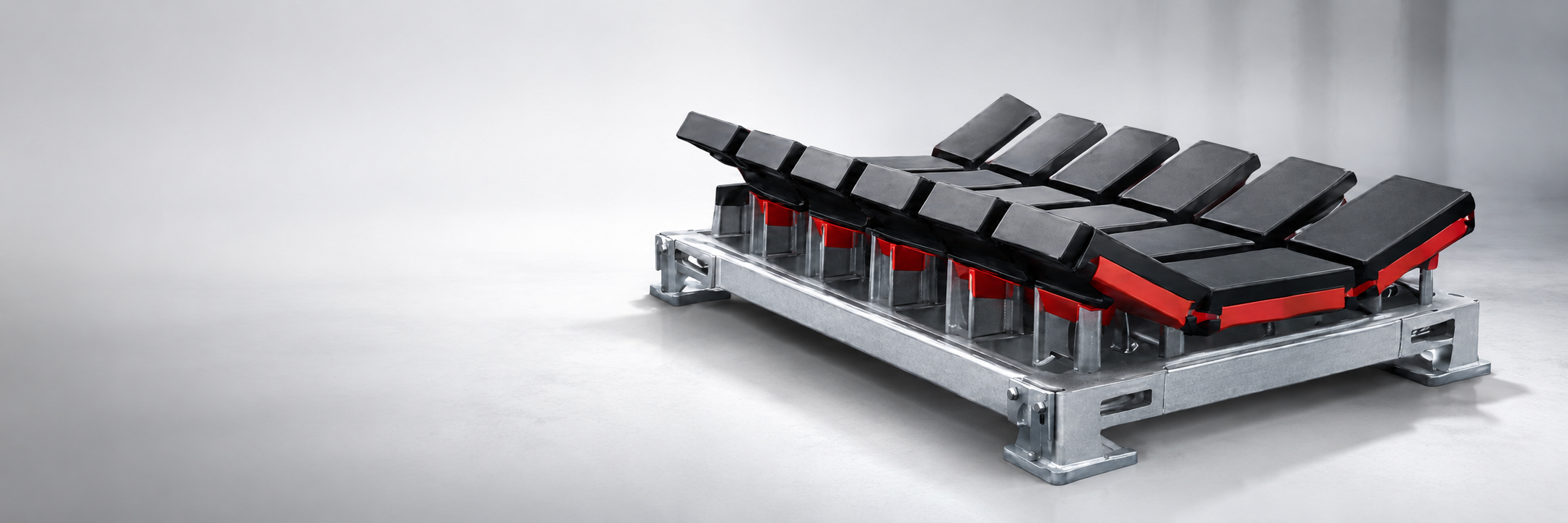
5. Match the belt to the idler geometry
Troughing angle, idler spacing and transition distance all influence how the belt sits. A belt that is too stiff for a 35° trough will not make contact with the centre roll; a belt that is too flexible will sag between idlers and spill material.
A practical checklist
- Material type, lump size, temperature and moisture recorded
- Conveyor length, lift and required capacity calculated
- Carcass class selected from tension, with a safety factor
- Cover grade matched to the dominant wear mechanism
- Minimum pulley diameter verified against the existing structure
If you would like this checklist applied to a specific conveyor, our interactive belt selector produces a starting specification in a few clicks, and our engineers review every quotation before it is issued.