
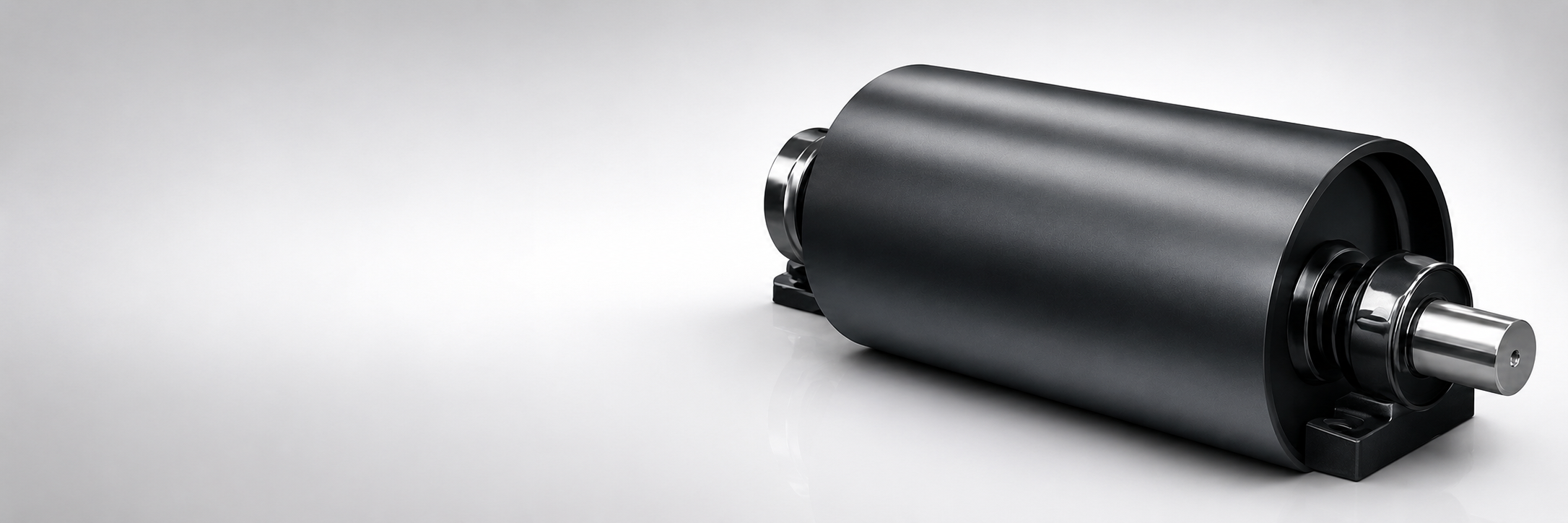
Tail Pulleys

Tail Pulleys
Tail pulleys are manufactured to support belt return and ensure stable tracking at the tail end of the conveyor. Moventis tail pulleys are designed with robust shell, shaft, and bearing arrangements to provide reliable operation and easy integration into conveyor systems.
| Parameter | Available Options / Range | Remarks |
|---|---|---|
| Pulley Type | Tail Pulley | Conveyor tail end |
| Pulley Diameter (Ø) | Ø250 – Ø800 mm | Custom diameters available |
| Face Width | According to belt width | Belt width + edge clearance |
| Shaft Diameter (Ø) | Ø40 – Ø160 mm | Selected based on pulley size & belt tension |
| Shaft Type | Solid shaft | Keyed as standard |
| Shaft Material | C45 / AISI 1045 | Higher grades on request |
| Shell Material | Carbon Steel (S235 / S355) | Machined & balanced |
| Pulley Surface Type | Plain / Wing pulley | Wing type for dirty or sticky materials |
| Lagging | Not lagged (standard) | Rubber lagging on request |
| Bearing Type | Spherical roller bearings | Long service life |
| Bearing Housing | SN / SNL plummer block | Standard |
| Balance Grade | Static / Dynamic | ISO balance standards |
| Design Standard | DIN / ISO | Customer standards possible |
| Operating Temperature | -20 °C to +80 °C | Extended range on request |
| Application Duty | Light / Medium / Heavy duty | — |
About Tail Pulleys
Tail pulleys are positioned at the loading end of belt conveyor systems, where raw material is fed onto the carrying strand of the belt. As a non-driven pulley, the tail pulley’s role is to redirect the returning belt from the return strand back to the carry strand, support the belt under impact loading from the incoming material, and maintain correct belt tracking at the feed end. Proper tail pulley selection and alignment is critical to system reliability — misalignment at the tail is the most common source of belt tracking problems across the full conveyor length.
Shell construction follows the same principles as drive pulleys: a welded steel shell machined to close diameter tolerances, connected to the shaft through end discs and interference-fit hubs. The shell surface for standard tail pulleys is left plain (unlagged), since no traction is required. However, rubber lagging may be specified when carryback buildup on the return belt is causing wear on the plain shell, or when the pulley is used in applications with particularly abrasive material.
Wing pulleys represent an important variant for tail applications. The open-wing design replaces the continuous shell with a series of radial wings welded to the hub, leaving gaps between adjacent wings. Material trapped between the belt backing and the pulley surface can escape through these gaps rather than accumulating on the shell. This self-cleaning action prevents the uneven buildup that causes belt mistracking and accelerated belt wear in dirty or sticky material applications.
Bearing selection for tail pulleys considers the combined radial load from belt tension and the vertical impact load from material falling onto the belt at the loading zone. Impact loads are highly dynamic and can reach several times the static belt tension load during heavy loading. Shock-absorbing chute designs and impact beds reduce the dynamic load transmitted to the tail pulley bearings, significantly extending bearing and belt service life in high-throughput applications.
Frequently Asked Questions
The tail pulley sits at the loading end of the conveyor — the point where material is introduced onto the belt. Its primary functions are to support the returning belt, establish the initial belt wrap, and maintain correct belt tension and tracking at the feed end. Unlike the drive pulley, the tail pulley does not transmit torque; it simply redirects the belt from the return strand to the carry strand while supporting the belt under the load of incoming material.
Minimum tail pulley diameter is governed by the belt carcass type (EP, NN, or Steel Cord) and strength class, following ISO/DIN standards. Using a pulley smaller than the minimum diameter causes excessive bending stress in the belt carcass at each revolution, leading to premature delamination or ply fatigue. The tail pulley is typically smaller than the drive pulley, but must still meet the minimum diameter requirement for the specific belt selected.
Wing pulleys are specified when material carryback is a concern — particularly with wet, sticky, or fine-grained materials that adhere to the belt backing. The open wing design allows material trapped between the belt and pulley to fall through the gaps between the wings rather than building up on the shell surface. Without this, material buildup causes uneven belt loading, accelerated belt wear, and tracking problems. Wing pulleys do impose higher dynamic belt loading and should be sized accordingly.
Most tail pulley assemblies incorporate slotted take-up frames or screw take-up mechanisms that allow lateral adjustment of the pulley position. Tilting the tail pulley slightly — raising one end — causes the belt to migrate toward the lower end, which can be used to correct chronic off-centre tracking. However, tracking corrections should first be addressed by aligning idlers and checking loading alignment. Pulley skewing is a last resort and must be applied gradually in small increments.
Tail pulley bearings are typically rated for L10 life of 30,000–50,000 hours under rated operating conditions, depending on the bearing selection and mounting arrangement. Because the tail pulley operates at the loading zone — where belt vibration, impact loads, and material spillage are highest — bearing seals and housing protection are particularly important. Contamination ingress is the leading cause of premature bearing failure in tail pulleys, so labyrinth seals and regular regreasing intervals are recommended.
Tail pulleys require periodic inspection of the shell surface for material buildup or wear, bearing regreasing or replacement, seal condition checks, and verification of shaft alignment. Wing pulleys should be inspected for cracked or worn wing segments. Tail pulleys in dirty environments should be checked more frequently — particularly after major material spillage events. The take-up mechanism should be greased and checked for correct belt tension, as slack belt at the tail is a common cause of mistracking and spillage.